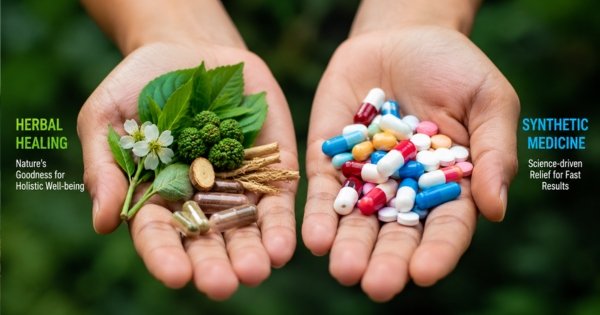
Two very different approaches to the same problem. Here’s an honest, practical breakdown of what each offers — and how to choose what’s right for you.
Feeling low on energy has become almost a modern epidemic. Whether it’s long work hours, poor sleep, or daily stress, many people turn to supplements for a quick boost. But the big question remains: should you choose herbal (natural) supplements or synthetic (lab-made) ones?
Let’s break it down in a clear, practical way.
The core distinction
“Herbal supplements work with your body. Synthetic supplements work on it.”
This single difference shapes everything — the speed of effect, the duration of benefit, the risk of side effects, and the long-term impact on your health. Understanding it is the key to making a smarter supplement choice.
What are herbal supplements?
Herbal supplements are derived from plants, roots, and natural extracts. They’ve been used for centuries in traditional healing systems like Ayurveda and Traditional Chinese Medicine — with a track record of safety and efficacy that predates modern clinical trials by millennia.
- Holistic and considered more natural
- Rich in antioxidants and phytonutrients
- Fewer harsh side effects when used correctly
- Effects may be slower or more subtle
- Potency varies by quality and source
- Less standardised dosing across brands
- Fast-acting and often more potent
- Precisely measured, consistent doses
- Widely researched with reliable quality
- May cause jitters, crashes, or dependency
- Lack supportive compounds of whole plants
- Overuse can strain the body over time
Energy boost: which works better?
The answer depends on your goal and lifestyle. There’s no universal winner — but there are clear patterns for each type of need.
For quick energy
Immediate performance
Synthetic options like caffeine or B vitamins tend to work faster. They stimulate the nervous system and quickly reduce fatigue — but may lead to crashes and dependency with regular use.
→ Synthetic has the edge
For sustained energy
Long-term vitality
Herbal adaptogens like Ashwagandha and Rhodiola help your body manage stress naturally — improving energy over time without spikes and crashes. The benefit compounds with consistent use.
→ Herbal is the clear winner
Key differences at a glance
Feature Herbal Synthetic
Source
Speed of effect
Effect duration
Side effects
Dose consistency
Dependency risk
Additional compounds
Plants & natural extracts
Slow to moderate
Long-lasting
Usually mild
Variable by source
Low
Antioxidants, phytonutrients
Lab-manufactured
Fast-acting
Short-term
Can be stronger
Highly consistent
Moderate to high
Isolated molecules only
So, which should you choose?
There’s no one-size-fits-all answer. The best choice depends on your individual needs, health status, and energy goals. Here’s a simple decision guide.
Choose herbal if
You want lasting energy
You’re looking for steady, sustainable vitality with fewer side effects and a long-term approach to managing stress and fatigue.
Choose synthetic if
You need a quick boost
You need rapid performance support — for a deadline, a competition, or an acute deficiency like low B12 diagnosed by a doctor.
Best of both
A balanced approach
Use herbal adaptogens as a daily foundation, and reach for targeted synthetic support only when a specific, acute need arises.
A word of caution
Not all supplements are created equal. Poor-quality products — both herbal and synthetic — can do more harm than good. Before choosing any supplement:
- Always check for third-party testing and a certificate of analysis
- Follow recommended dosages — more is not always better
- Consult a healthcare professional if you have any underlying conditions
- Be aware of potential interactions with medications you’re currently taking
Final thoughts
Energy isn't just about supplements — it's about sleep, nutrition, hydration, and stress management. Supplements can support you, but they shouldn't replace a healthy lifestyle. In the herbal vs synthetic debate, the real winner is informed choice. Understanding how each works helps you use them smarter — and feel better, longer.

This content is for informational purposes only and does not replace professional medical advice. Always consult a qualified healthcare professional before beginning any new supplement regimen.